
Not every product that enters Europe has to be customs cleared and released to the market immediately. For many importers, customs warehousing works like a controlled pause button: goods can physically enter the European customs territory, but the final commercial decision can be delayed.
A container with spare parts, for example, may arrive through Rotterdam or Hamburg, move to an approved warehouse, and then be released in smaller batches when real orders come from Germany, Czechia, Austria, Bulgaria, or another European market. This is not just a storage choice. It is a way to manage duties, VAT, documents, cash flow, and uncertainty before the goods officially enter free circulation.
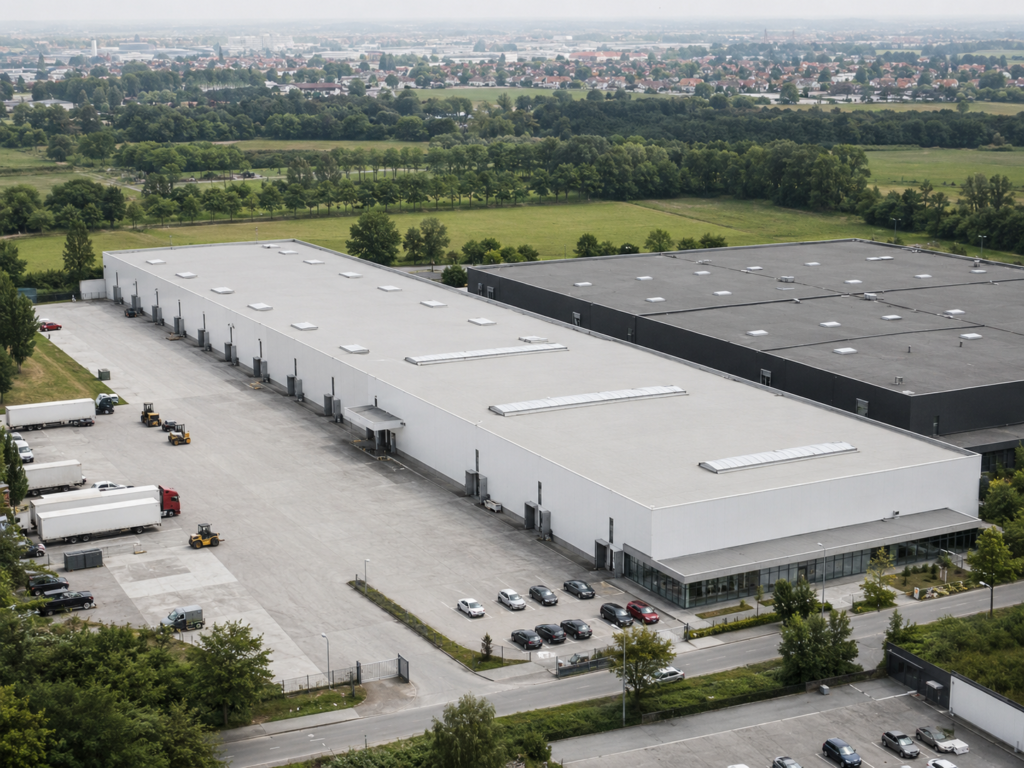
What customs warehousing means in Europe
Customs warehousing means storing non-EU goods in premises authorised by customs authorities while the goods remain under customs supervision. The European Commission treats customs warehousing as part of the broader storage procedure, together with free zones. The purpose is to give businesses flexibility when they import non-EU goods before deciding what to do with them. While the goods remain under the storage procedure, they are not subject to import duties or certain other charges.
This is the key point: goods may already be in Europe from a logistics perspective, but they are not yet released into the EU market from a customs perspective. Import duties, VAT, and excise duties become due when the goods are removed from the warehouse and released for free circulation. They may also be placed under another customs procedure, such as inward processing or end-use, instead of being sold in the EU immediately.
Why a customs warehouse is not just a warehouse
A normal warehouse usually stores goods that have already been customs cleared and can move freely within the EU. A customs warehouse stores non-EU goods that are still under customs control. That difference changes the business logic completely.
In a normal warehouse, the main questions are space, handling, stock rotation, picking, packing, and dispatch. In a customs warehouse, those questions remain important, but they are joined by customs status, tariff classification, origin, customs value, guarantees, records, authorisations, and traceability. The warehouse is not only a place for pallets. It becomes a financial and regulatory tool.
This is why customs warehousing is often used by companies that need to keep stock close to European customers, but do not want to pay import duties and VAT on the entire shipment before they know where and when the goods will be sold.
How the process works in practice
A typical customs warehousing flow in Europe includes several controlled stages:
- Goods arrive in the EU by sea, air, road, rail, or inland waterway.
- Advance safety and security data are submitted before arrival where required.
- The goods are presented to customs and may be checked.
- They move through temporary storage or under a transit procedure.
- A customs declaration places the goods under the customs warehousing procedure.
- The warehouse operator keeps accurate stock records under customs supervision.
- Goods are later released for free circulation, re-exported, transferred to another customs procedure, or moved under transit.
For goods entering or transiting through the EU, the Import Control System 2 requires economic operators to declare safety and security data through an Entry Summary Declaration. This allows customs authorities to perform risk analysis before the goods arrive and target controls more effectively.
Customs warehouse, temporary storage, and free zone
Temporary storage is the short intermediate stage after non-EU goods arrive and are presented to customs. According to the European Commission, goods in temporary storage must be placed under a customs procedure or re-exported after 90 days. If this does not happen, customs authorities may take measures such as selling or destroying the goods at the expense of the responsible party.
Customs warehousing is different. It is designed for longer and more strategic storage. The European Commission states that customs warehousing may be for an unlimited period, except where the nature of the goods creates health or environmental risks if stored for too long.
A free zone is also part of the EU storage framework, but it is linked to a designated area rather than a specific warehouse model. In practice, companies choose between temporary storage, customs warehousing, transit, free zones, and other procedures depending on timing, destination, goods type, and commercial plans.
Main business advantages
Customs warehousing is useful because it gives importers more control over timing and cost. The main advantages are:
- Deferral of import duties and VAT until goods are released for free circulation.
- Better cash flow because taxes are paid only when goods actually enter the EU market.
- Step-by-step release of stock according to real customer orders.
- Storage closer to European buyers without immediate customs clearance of the full shipment.
- Possibility to re-export goods without unnecessary EU import clearance.
- More flexibility when demand, destination, or final buyer is not yet certain.
A practical example is an importer of industrial components from Asia. Instead of clearing the entire shipment at once, the company can store the stock in Central Europe under customs control and release only the quantities sold to EU customers.
When customs warehousing is especially useful
This model is most valuable when goods are expensive, demand is uncertain, destination is not final, or stock needs to serve several markets at once. Typical use cases include:
- Seasonal goods that may be released gradually before peak demand.
- Spare parts needed close to customers but not sold immediately.
- Electronics with fast-changing demand and product cycles.
- Textiles and consumer goods distributed across several countries.
- Machinery and project cargo linked to staged installations.
- Raw materials that may be processed, sold, or re-exported.
- E-commerce stock that benefits from better control inside Europe.
The model is especially useful when one stock position may serve Germany, Poland, Romania, Bulgaria, Switzerland, the United Kingdom, or other nearby markets. In such cases, the customs warehouse helps keep the commercial decision open until the final order, route, or buyer is clear.
The role of customs warehousing in multimodal European logistics
Customs warehousing fits naturally into European multimodal logistics. Goods may enter through a seaport, move by rail to an inland terminal, transfer to a bonded warehouse, and then continue by truck to several countries. This is common when one large import shipment has to be split into smaller regional deliveries.
For example, a container may arrive by sea in Antwerp, continue by rail to an inland hub, be stored under customs warehousing, and then be distributed by road to customers in different EU markets. The benefit is not only tax deferral. It is the ability to combine port logistics, inland terminals, rail freight, road transport, warehousing, and customs planning into one controlled supply chain.
A customs warehouse located near a major corridor can also reduce operational pressure. Instead of rushing to clear and dispatch all goods immediately after arrival, the importer can separate customs decisions from physical transport decisions.
Documents, control, and responsibilities
The benefits of customs warehousing come with strict discipline. To operate customs warehousing facilities, companies need authorisation from customs authorities, must be established in the EU customs territory, must provide assurance that the facilities will be properly run, and must provide a guarantee where customs debt or other charges may arise.
Importers, warehouse operators, and customs representatives must also manage classification, origin, customs value, EORI data, stock records, and product restrictions. Poor data can create delays, additional controls, wrong duty calculations, or compliance risk.
The Union Customs Code was created to modernise EU customs rules, support a paperless and fully electronic customs environment, increase legal certainty, and reinforce faster procedures for compliant and trustworthy economic operators.
CBAM and new regulatory requirements
Customs warehousing is no longer only about storage and duty deferral. It is increasingly connected with wider regulatory planning. The Carbon Border Adjustment Mechanism entered its definitive regime on 1 January 2026 after a transitional phase from 2023 to 2025. The current scope covers carbon-intensive goods such as cement, iron and steel, aluminium, fertilisers, electricity, and hydrogen.
For importers of metals, industrial materials, and components, this means that customs planning and carbon reporting are becoming more closely linked. A warehouse strategy has to take into account not only where the goods are stored and when duties are paid, but also whether the goods fall under additional reporting or authorisation obligations.
E-commerce pressure and the new role of European warehouses
The rise of small parcels from outside the EU is changing the role of European warehousing. From 1 July 2026, the EU will apply a temporary €3 customs duty per item on low-value consignments up to €150 imported from outside the EU. This replaces the previous duty exemption and will apply until 1 July 2028. Product identifiers will become mandatory from 1 November 2026, although they can be declared voluntarily from 1 July 2026.
The European Commission reported that almost 5.9 billion low-value items were shipped directly from third countries to EU consumers in 2025 without paying customs duties. It also reported that targeted inspections in 2025 found that more than 60 percent of checked products in categories such as cosmetics, personal protective equipment, food supplements, toys, and electronics failed EU standards.
This pressure may make European warehouse models more attractive for some online sellers. Instead of sending millions of individual parcels directly across the EU border, stock can be imported, checked, stored, and distributed in a more predictable way.
EU customs reform: more data, less chaos
On 26 March 2026, the European Parliament and the Council reached a political agreement on the most comprehensive reform of the EU Customs Union since its establishment in 1968. The reform introduces measures for e-commerce and a more data-driven customs architecture.
A central element is the EU Customs Data Hub, managed by the new EU Customs Authority. The European Parliament states that the hub will be available for optional use by 2031 and mandatory by 2034, replacing at least 111 customs software systems currently used across the EU. The aim is faster customs dealings, more effective risk analysis, and stronger cooperation between customs authorities.
For logistics planning, the direction is clear. Customs warehousing will increasingly depend on clean data, accurate product information, and systems that can connect storage, customs status, and transport movements.
How to choose a logistics partner for customs warehousing
A customs warehousing partner should be chosen not only by warehouse location and storage price. The more important question is whether the provider can manage both the physical and customs side of the operation.
Practical criteria include:
- The warehouse has the necessary customs authorisations.
- The operator can maintain accurate customs stock records.
- The system can separate batches, statuses, and customer orders.
- The warehouse management system supports traceability.
- Customs representatives are available when declarations are needed.
- The provider understands the specific goods and their restrictions.
- The warehouse can support onward distribution across Europe.
- Storage, customs handling, transport, and documentation can be coordinated together.
This is where the international freight forwarder often plays a connecting role. The value is not only in moving goods from port to warehouse, but in linking customs planning, bonded storage, multimodal transport, and final distribution.
Interesting facts to put the topic in perspective
Customs warehousing is only one mechanism inside a much larger European customs system. The scale of that system shows why discipline and data quality matter:
- The EU customs union manages trade worth more than €4.3 trillion.
- This represents around 14 percent of global trade.
- In 2024, 2,140 customs offices collected almost €27 billion in customs duties.
- In the same year, customs handled more than 1,370 million import, export, and transit items.
- EU customs authorities also detained 112 million counterfeit items in 2024.
For logistics teams, customs warehousing is therefore not a niche procedure. It is a practical way to keep goods close to the European market while maintaining control over cash flow, customs timing, compliance risk, and final distribution decisions.