
A T1 transit declaration is used mainly when non-Union goods must move under customs control before they are released for import or assigned another customs procedure. It allows the goods to travel from an EU entry point to an inland customs office, customs warehouse or another authorised destination while import duty, import VAT and applicable commercial policy measures remain suspended.
T1 is not a transport document and does not replace a CMR consignment note, bill of lading, commercial invoice or packing list. It is a customs procedure tied to the goods’ status, the declared route, the customs offices involved, a time limit and a financial guarantee. Importers, exporters and freight forwarders therefore need to decide whether transit is required before dispatch, not when the vehicle is already waiting at a border or terminal.
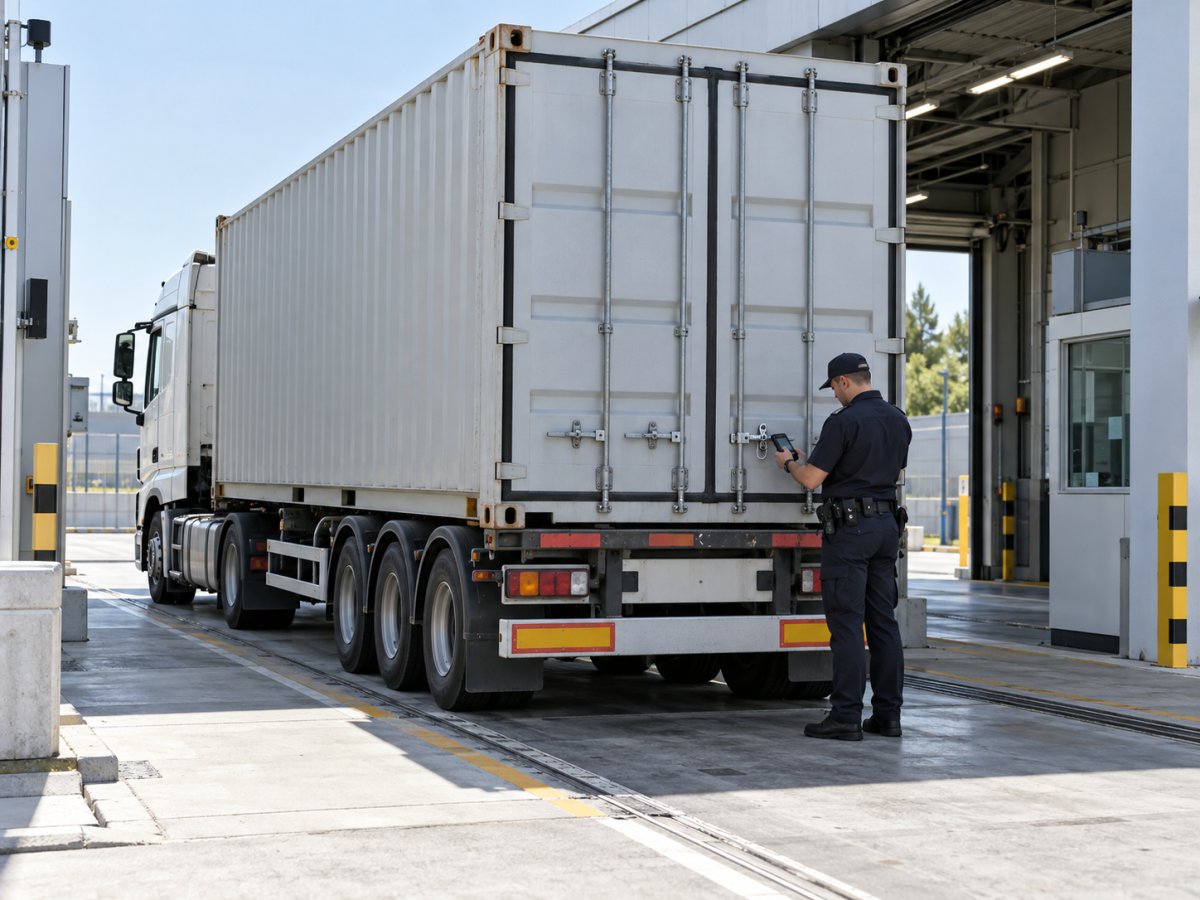
When T1 is used
The external Union transit procedure normally applies to non-Union goods. According to the European Commission’s customs transit guidance, transit temporarily suspends duties, taxes and commercial policy measures and permits customs clearance at destination instead of at the point of entry.
Typical cases include a container arriving from a third country at an EU seaport and moving uncleared to an inland customs office, air cargo transferred from an airport temporary-storage facility to another approved location, or goods moved between customs warehouses. T1 may also be used under common transit when a movement crosses countries participating in the Common Transit Convention. The correct procedure must still be confirmed for the actual customs status and route.
- non-Union goods moving from an EU port or airport to an inland place of clearance;
- uncleared goods transferred between authorised customs locations;
- goods moving under common transit between the EU and another contracting country;
- non-Union goods crossing several customs territories before final clearance.
T1, T2 and final customs clearance
T1 is principally associated with non-Union goods. T2 is used in the relevant transit movements for Union goods, including cases where Union goods pass through territory outside the EU customs territory without losing their customs status. The distinction cannot be made from the country of dispatch alone: the declarant needs evidence of the goods’ customs status and must consider every leg of the route.
Neither T1 nor T2 is final import clearance. A T1 movement ends when the goods and the transit reference are properly presented at the office of destination and the procedure is discharged. The consignee may then place the goods under import, customs warehousing or another permitted procedure. A CMR, invoice or bill of lading describes the commercial or transport movement but does not substitute for the electronic transit declaration.
Costs, guarantee and the holder’s liability
There is no single European flat fee for opening a T1. A quotation can include preparation and submission of the declaration, use of an individual or comprehensive guarantee, customs presentation, terminal handling, amendments, waiting time and work required when the declaration data do not match the cargo. The amount secured by the guarantee is based on the potential customs debt rather than the freight rate.
The holder of the procedure is responsible for presenting the goods intact, with the prescribed documents, at the office of destination within the time limit and in compliance with identification measures such as customs seals. The guarantor’s exposure and the holder’s operational liability make accurate value, commodity code, origin, quantity and route data essential. A low administration charge does not compensate for an insufficient guarantee or a declaration that cannot be discharged.
For a route-specific check of the transit setup, guarantee and required data, send an enquiry before the goods are dispatched.
Data and documents required to open T1
The declaration must identify the parties, goods, customs offices, transport equipment and guarantee. An EORI number is mandatory for EU customs operations, including transit, where the legislation requires the economic operator to be identified. The party preparing the movement should receive the documents early enough to reconcile discrepancies before the vehicle is presented.
- EORI and full identification of the holder, consignor, consignee and representative;
- office of departure, office of destination and any required offices of transit;
- precise goods description, commodity code, origin, value, package type and quantity;
- gross and net mass, container number, vehicle registration and seal details when applicable;
- commercial invoice, packing list and CMR, bill of lading or other transport reference;
- previous customs document or temporary-storage reference and the applicable guarantee reference.
Descriptions such as “parts”, “equipment” or “samples” are rarely precise enough on their own. The description should allow customs to understand what the goods are and to compare the declaration with invoices, packing records and the physical consignment.
Opening the transit movement through NCTS
Union and common transit declarations are exchanged electronically through the New Computerised Transit System (NCTS). The declaration is submitted to the office of departure, where customs can validate the data, examine documents or goods, check the guarantee and decide whether seals or other identification measures are needed.
After acceptance and release, the movement receives a Movement Reference Number (MRN). The carrier must receive the correct MRN and practical instructions for the office of destination, presentation deadline, prescribed itinerary if one is set, and any seal numbers. The current NCTS message flow and national access method should be checked for the country where the declaration is lodged; old screenshots or legacy field codes are not reliable operating instructions.
Movement, controls and changes during the route
During transport, the carrier should monitor the deadline, route instructions, vehicle or container identity and the integrity of customs seals. The physical goods must remain consistent with the declaration. A trailer change, transhipment or broken seal is not merely an internal transport note because it may affect the means by which customs identifies the consignment.
If an accident, damaged seal, necessary transhipment or other incident occurs, the driver should secure the load and immediately contact the responsible transit coordinator for instructions. The competent customs authority may need to record the event or authorise the next step. Cargo should not be moved into another vehicle, opened or delivered to a different location solely to maintain the schedule.
Presentation at destination and discharge of T1
Arrival at the consignee’s warehouse does not by itself close a T1 movement. The goods, the MRN and the relevant documents must be presented at the declared office of destination or to an authorised consignee in accordance with the approved procedure. Customs checks the deadline, seals, identity and any discrepancies and sends the destination results electronically.
The procedure is discharged only after the authorities can match satisfactory destination information with the departure movement. Until that happens, the guarantee can remain committed and the holder may be asked to provide alternative evidence or participate in an enquiry. The operator should therefore monitor the electronic status rather than treat a signed delivery note as proof of customs discharge.
Common causes of delay or an undischarged movement
- the wrong office of destination or an incomplete office-of-transit route;
- incorrect commodity code, customs status, package count, mass or vehicle registration;
- a missing previous-document reference or an unavailable guarantee balance;
- a broken or mismatched seal that was not reported through the proper channel;
- delivery to a warehouse without customs presentation or presentation after the deadline;
- differences between the declaration, invoices, packing list and the physical goods.
A useful pre-departure control matches the commercial papers, package count, weight, transport equipment, customs offices and guarantee against the submitted declaration. At destination, a named person should be responsible for presentation and for confirming that the movement has reached discharged status.
Arranging T1 transit through an IFA member
An effective request includes the origin and destination, border or terminal points, goods description and code, customs status, value, mass, package count, invoice and packing list, transport equipment, previous customs reference, intended clearance location and dispatch date. Any planned transhipment or change of vehicle should be stated before the declaration is opened.
An IFA member can coordinate the transport instructions and the customs parties involved in the movement, while the exact declarant, holder, guarantee and customs representation are confirmed for the shipment. To organise the movement and customs handovers for a specific consignment, request an individual assessment.